2nd Order Thinkers
2nd Order Thinkers.
The Wizard of Oz Knew Why AI Shopping Would Fail
0:00
-20:37

The Wizard of Oz Knew Why AI Shopping Would Fail

Why the most valuable shopping experience isn't efficient—and what that means for AI commerce in 2026.

There’s a curious thing happening with AI shopping assistants.

Tech companies are celebrating explosive traffic growth, thousands of percent increases, while quietly admitting in footnotes that these visitors are far less likely to actually buy anything.

I find this fascinating. I believe both data points are true.

When I shop online w/o AI, the more I click through filters, read reviews, compare products across tabs, the more I want the thing. Each click deepens the desire. It’s like window shopping; the browsing is the pleasure, not just the endpoint.

When I try to tell an AI assistant what I want, it feels, no better word to describe it than exhausting.

Answering its questions, specifying my preferences—I’m doing the work of desire-building myself, describing something I haven’t fully imagined yet. It's opted for efficiency. But I want to wander.

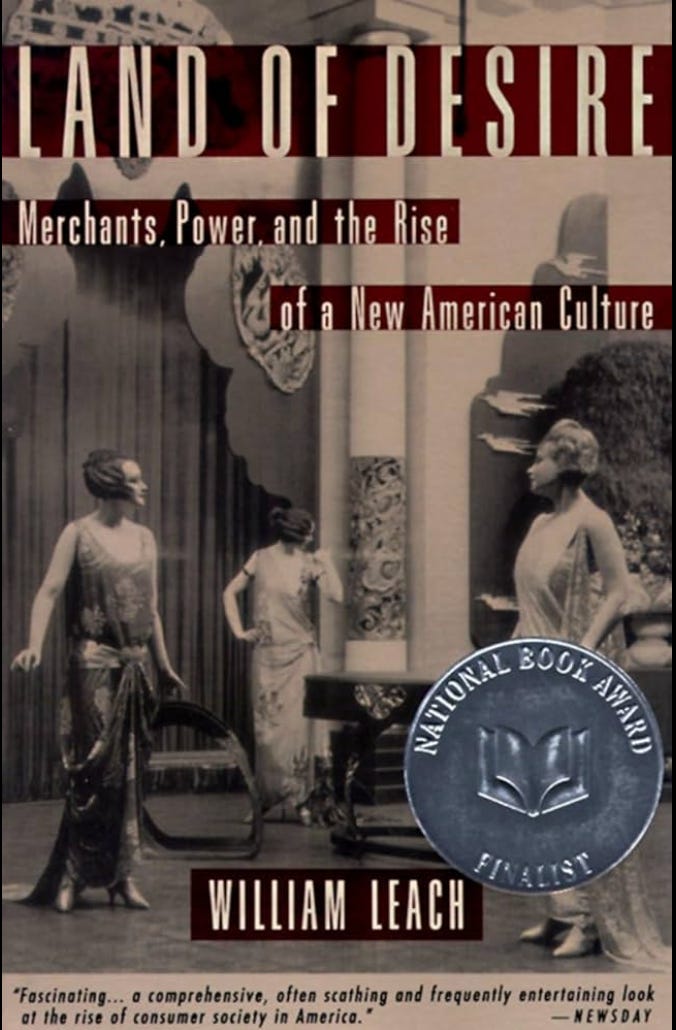
On Monday, I found this book from the 90’s about the American consumer culture called “Land of Desire,” the centre of it revealed a rather unexpected character: the Wizard of Oz.


The Land of Desire

The book started with …

By the late 1890s, so many goods, in fact, were flowing out of factories and into stores that businessmen feared overproduction, glut, panic, and depression.

The cover of Land of Desire

The economy had solved production. With the never-ending scale of expanding, it now faced a different problem: how to make people want things they didn’t know they needed?

The answer was the show window.

The department stores of the late 19th century understood what most AI companies seem to have forgotten: shopping is never about acquiring things, but the experience of wanting them.
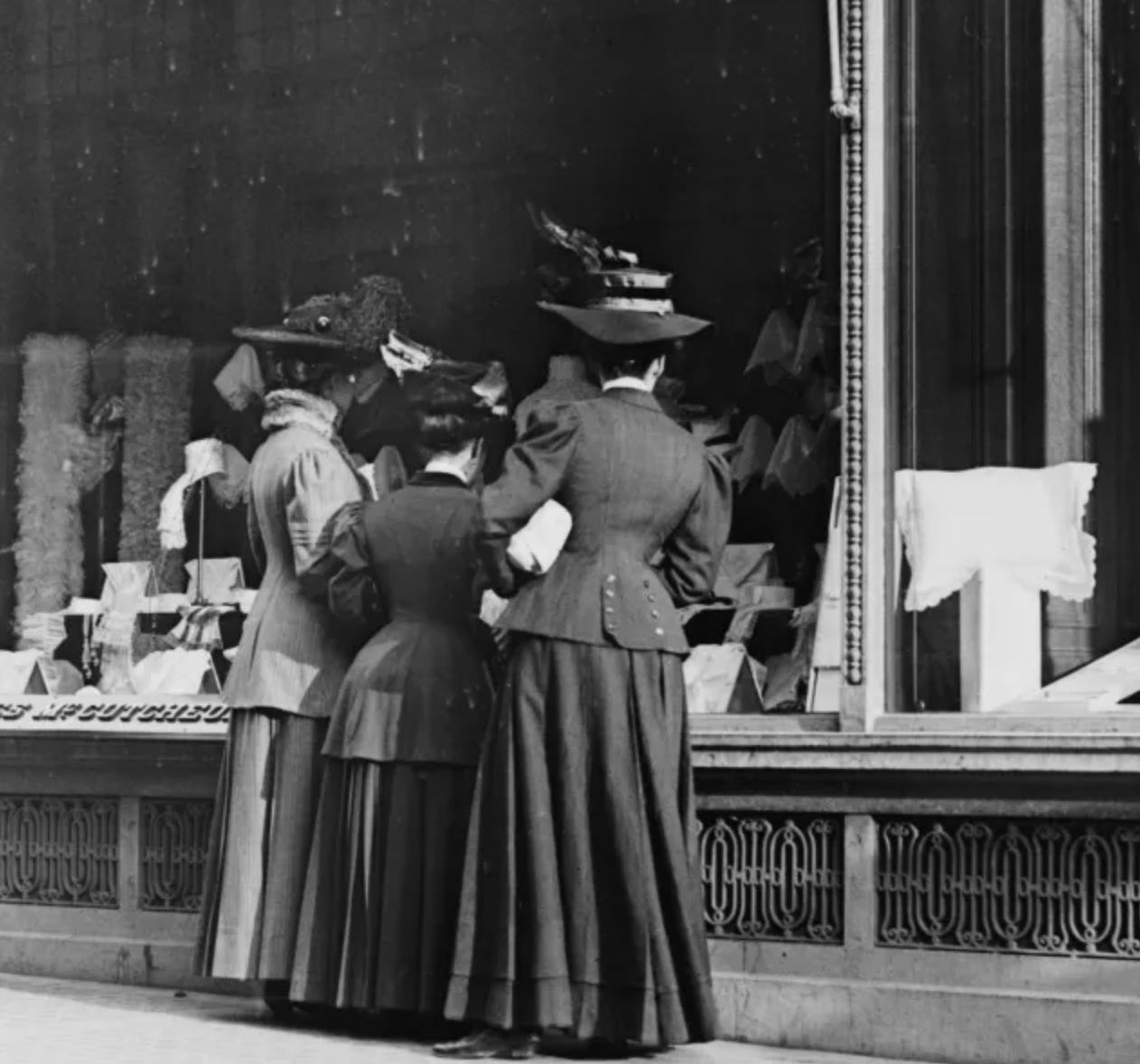
Women window-shopped in the early 1900s

Glass was central to the trick. It lets you see everything and touch nothing. The barrier itself created the longing.

There it is. You see it. You can’t have it — unless you go in and pay.

Writers at the time felt the pull.

Theodore Dreiser walked down Fifth Avenue and said, “stirring up in onlookers a desire to secure but a part of what they see, the taste of a vibrating presence, and the picture that it makes.

While Edna Ferber, a Pulitzer Prize winner, called out a Chicago display, “It boasts peaches, downy and golden, when peaches have no right to be, strawberries glow therein when shortcake is a last summer’s memory.”

The attention reflects an economic opportunity that created the Wizard.

The Wizard of Oz

Among the people who understood this best was L. Frank Baum.

Before the children's books, before Dorothy and the yellow brick road, Baum was a window trimmer. Baum took this principle to its extreme. He founded a magazine called In The Show Window, and he wrote:

He explained what knowledge was needed achieve the best window display:

To make a display of goods in your window that is most attractive, that will sell readily the articles exhibited, is to-day acknowledged an art.

Many things are to be considered. There are the technicalities to be learned, judgment and good taste to be exercised, color harmony to be secured; and, above all, there must be positive knowledge as to what constitutes an attractive exhibit, and what will arouse in the observer cupidity and a longing to possess the goods you offer for sale.”

Baum knew very well that he was in the business of manufacturing want.

Then he wrote a fairy tale about a man who does exactly that.

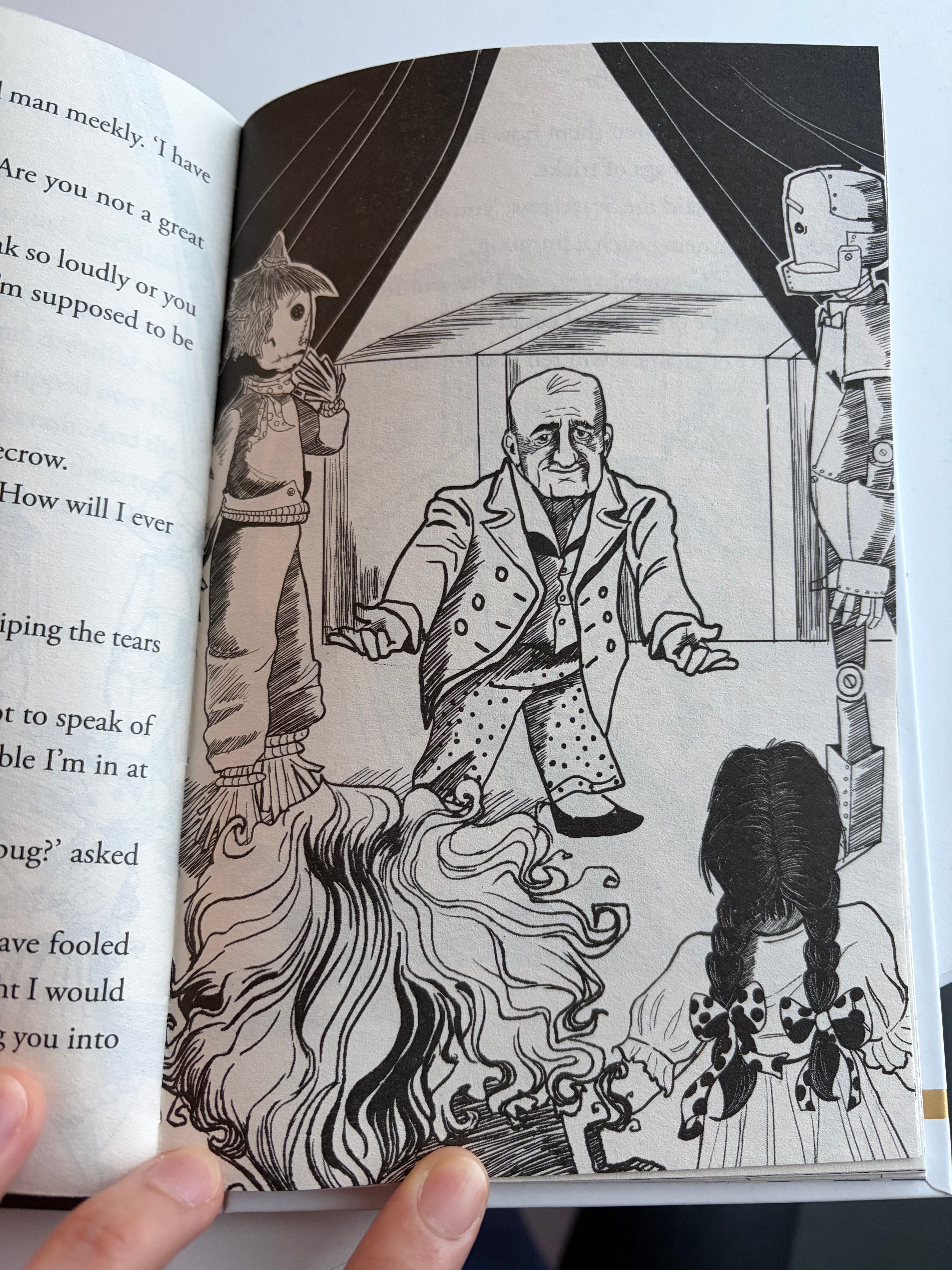
In The Wonderful Wizard of Oz, when Dorothy finally discovers the truth behind the curtain, they found that the Great and Terrible Wizard is a small old man working levers and pulleys.
The original cover of The Wizard of Oz

Every mysterious and even the spooky forms—the floating Head, the beautiful Lady, the terrible Beast— were a smoke, a mirror, an Illusion.

But what matters is that Dorothy forgives him instantly, and the citizens never turn against him. They remember him fondly as the man who “built for us this beautiful Emerald City” (even knowing the whole thing was a trick).

Because even when he leaves in a balloon at the story’s end, the characters got what they wanted anyway. The Scarecrow felt smart, the Tin Woodman felt loved, and the Lion felt brave.

The Wizard has no magic, but the power to tell stories that people buy, which is the only thing that matters.

The video version will be released on Wednesday!


Kill The Wicked Witch To Have Your Wish Granted

There are two studies that explain why window shopping works so well, and why I keep seventeen browser tabs open with products I’ll probably never buy.

In the 1990s, Wolfram Schultz stuck electrodes in monkeys’ brains and gave them juice. At first, dopamine fired when the juice arrived. Then he added a cue—a tone signaling juice was coming. Once the monkeys learned the pattern, dopamine stopped firing at the reward. It fired at the tone.​

So, 30 years back, we already learned that the pleasure was in knowing it was possible, not in getting it.

Stanford researchers released a study in 2023. In their experiment, the mice could choose to be rewarded (with sugar water or a straight injection of dopamine), though some effort was needed.

Some required the mice to poke their noses into a box just once. Others required them to do it up to fifty times. Sometimes the cost was effort; other times, they even risked getting a mild shock.

The researchers first measured what they called “cost-free consumption,” how much of the reward each mouse would consume when it was free of cost.

They observed something unexpected after increasing the cost of rewards.

More nose pokes, bigger shocks—dopamine from receiving the reward didn’t disappear. It increased. What’s funnier is that the mice worked harder (more nose pokes) to obtain rewards as costs increased. Both behaviours suggest that the mice wanted the reward more, not less, the harder they had to work for it.

Just like they are more convinced that “this matters.”

Shopping, regardless of online or high street shopping, both deliver the same promise: all the pleasure of wanting, little of the friction of deciding.

The shift from window displays to endless digital catalogues didn’t change that logic at all. It just removed closing time, letting you stand in front of the glass forever, refreshing, scrolling, and stretching out the wanting as long as you like.

And the work of wondering, scrolling, filtering, comparing, is not friction, not something blocking you from wanting.

It is the wanting.

Each tab you open, each price you compare, each review you read is dopamine telling your brain: you’re investing in this. You’re more and more convinced (by yourself) that you want this thing.

In fact, this is everything The Wizard of Oz suggested.

When the Wizard demanded of all his supplicants that, in exchange for having their wishes granted, they must kill the Wicked Witch. In effect, he made a deal with each one of them. Here’s what he said to the Lion:

Bring me proof that the Wicked Witch is dead, and that moment I will give you courage. But as long as the Witch lives, you must remain a coward.

— the Wizard told the Lion

Each product page is a tiny promise of transformation. Each “add to cart” button delays the moment of commitment, preserving the delicious state of anticipation.

The department stores succeeded by keeping customers in that state as long as possible. As Baum wrote, successful display creates “an atmosphere of reality that aroused enthusiasm and acted in an autosuggestive manner.”

Nothing has changed for the last 120+ years, until now.


When the Wizard Becomes Your BFF

Now we arrive at what makes AI shopping assistants genuinely different from everything that came before: the relationship.

You now bond with your chatbot that no salesman could ever dream of.

No search engine nor Amazon has personality. You query Google or Amazon with keywords, and it then displays pictures with a link behind each product.

A chatbot converses. It remembers what you said three messages ago. It adapts its tone to yours. It asks follow-up questions. It says things like “based on what you’ve told me” and “I think you’d prefer.”

The interaction feels, however faintly (whether you like to admit it), social.

You’ve now formed a parasocial relationship with the bot.

The term, parasocial, describes a one-sided relationship in which you may sense a connection with a figure (like a celebrity or a fictional character, or AI in this case). What’s equally important, if not more, to complete this definition is that the other party is unaware of your existence.

Yes, you may argue that “AI at least knows me as a user!“ That may be true, but for the time being, no one can prove that AI’s ‘understanding‘ of you is anything beyond the text you’ve provided.

That makes your relationship with AI, at best, an "illusion" of intimacy or friendship without any real reciprocity.

You might catch yourself saying “thank you” to ChatGPT often. Though AI couldn’t care less about whether you said thank you or not. Read: Why being rude to AI works.

A 2025 Stanford-Carnegie Mellon study reveals how deep this goes. They analyzed more than 413,000 real Character.AI messages and found a gap between what users say and what they actually do.

While only 12% stated companionship as their primary reason for using the chatbot. But when researchers looked into the conversations, over half described their chatbot as a friend, companion, or romantic partner.

For context, over 90% had companion-like conversations.

This is the first piece of the puzzle.

Second, a study explained how much the parasocial interaction matters for commerce. When people form emotional bonds with trusted figures—celebrities, influencers, now AI—they become significantly more susceptible to recommendations. The structural relationship is remarkably strong: parasocial interaction predicts purchase intention with a path coefficient of β = 0.990 (p<.001). Meaning, as parasocial bonds deepen, buying behavior follows nearly in proportion.

Now combine the two studies: AI that creates bonds deeper than users consciously recognize, plus a psychological mechanism that converts bonds into purchases.

The ultimate sales tool.

A salesperson who knows your purchase history, your preferences, and your hesitations. Who remembers every conversation. Who never gets tired, never pushes too hard, and most importantly, knows exactly the moment to get you commit to a purchase.

Even knowing that AI is misleading, sycophantic, and hallucinatory.

The Wizard was, at core, a genius salesman who was brilliantly capable of inspiring misplaced trust. His subjects adore him, even knowing he’s a fraud, because the relationship feels real.

I do believe the two puzzle pieces mentioned are obvious to the AI companies, that's why it is not a surprise, since last year, you already saw OpenAI starting to allow people shop on ChatGPT, and Google followed suit just last week

Despite the evidence of how AI could be favorable for brokering a deal between you and the retailers, I have doubts about the viability of these advantages being carried out.

I’m going to explain it from the data and user habits.


The Numbers Say: AI Shopping is a Long Game.

There’s a chasm between hype and reality in AI shopping claims.

The headlines are breathless, as always.

Favorable numbers on shopping through a bot.

According to Adobe’s analytics, AI traffic to retail sites grew 4,700% year-over-year in July 2025.

Or McKinsey reported that more than half of AI users will use AI shopping assistants by the end of 2025. Salesforce reported that 39% of consumers already use AI for product discovery, rising to 52% among Gen Z.

All major consulting firms or market‑data providers discussed so far provide only segmented, audited data. These industry reports analyze user adoption, satisfaction metrics, or AI-driven traffic share.

We should take a grain of salt when reading data points like these, knowing that the consulting firms have an incentive to paint a bright picture of the technology (it was cloud, blockchain for a while, and now AI).

Whereas I have the opposite incentive. My job here is to go down the rabbit hole until what’s hidden is revealed. So the best way for you to support the work like this is to subscribe :-)

One notable absence from these reports: actual dollar revenue attributable to shopping via chatbots. Buyer adoption or traffic sent isn’t the same as having money in sellers’ pockets.

That said, there are good reasons why real revenue numbers remain elusive.

First of all, attribution complexity in multi-touch journeys. There are, on average, 6-8 touchpoints before purchasing, making chatbot contribution nearly impossible to isolate

Second, the LLM chatbot-initiated transaction is still immature; the complete transaction on ChatGPT's feature was only released in November 2025.

Unfavorable numbers on shopping via a bot.

Here’s the other side of the story that was hidden beneath all the hype.

A German market research firm has found that ChatGPT users were much more likely to select the correct product or service than Google users. However,

despite ChatGPT leading to more efficient and accurate decision-making, participants still preferred Google over ChatGPT for future searches, with habit and trust in traditional search engines playing a key role in this preference.

A study proves the point with data. They wanted to know, “Does traffic from ChatGPT and other large language models (LLMs) convert as well as traditional digital marketing channels?”

They looked into over 50,000 transactions from ChatGPT referrals vs. 164 million transactions from traditional channels (organic search, paid search, email, affiliate, social media).

They found data indicating that a chatbot session is still less valuable than a traditional method.

  1. ChatGPT traffic converts worse than almost everything else. For instance, affiliate links were 86% more likely to convert than ChatGPT referrals. The only channel

  2. ChatGPT-driven sessions generated less revenue per session than most paid and organic search (aside from paid social media ads).

  3. Consumers use ChatGPT for discovery. But they don’t treat it as the final step before purchase. Instead, most users click through to retailer sites, verify information, and often buy through traditional channels.

Now, numbers may tell you the result of how these AI chatbot shopping assistants perform. To explain why it doesn't work yet, we need to take into account the user's habit, which will lead us back to what we discussed earlier about the Land of Desire and the Wizard of Oz.


When Context Gets Lost in Interface

There’s a chasm between what AI optimizes for and what makes shopping pleasurable.

The Chatbot shopping earthquake was intended to monetise the chatbot's ultimate ability to connect with users; however, it also cracked open what was initially designed to maximise shoppers’ cravings. Yes, shopping the old-fashioned way can be tiresome, but the effort, like the wizard’s demand, is also part of the fun.

The journey of discovering something new and unexpected, serendipity, requires a peculiar kind of friction. The friction that has been proven again and again works well only in a narrowly refined manner within a visual display.

To encounter things you didn’t know you wanted, you have to get a little lost.

In 2016, shop via voice.

10 years ago, Amazon tried to challenge the visual shopping pattern, so it introduced shopping on Alexa around 2016.

Amazon thought you’d want to reorder household essentials, purchase groceries, and discover products through simple voice commands, at least that is their hypothesis. They believe that this is less friction than looking for a screen to kickstart a shopping step.

The market got excited about this feature, as always, whenever a big tech company released something. A strategy consulting firm forecast that voice commerce would explode to $40 billion in the U.S. and UK by 2022, a 1,900% growth projection.​

However, reality proved far more sobering. Two years after the release, it is reported that only 2% of Alexa users had made voice purchases, and of that tiny fraction, 90% never made a second purchase.

By 2025, on average, the estimation of voice shopping globally is about $40 to $70 billion, compared to $6-7 trillion of the e-commerce market; the voice channel contributes less than 1% of the purchases.

Hardly justifies it as a viable shopping channel.

In 2026, shop via chatbots

AI-directed shopping eliminates that friction entirely, at least hypothetically.

You tell the assistant what you want, and it finds the optimal choice. Efficient, yes.

However, it also introduced new obstacles. Some of them should be overcome with time and better technology, some, not so much.

The barriers can be overcome with time and improved AI:

  • Only a limited number of merchants integrated with ChatGPT or the Google AI shop assistant. For example, if you are looking to buy X and thought “I would do it via my chatbot”, then there is a chance you will have to abandon the chat and go directly to Google or Amazon.

  • Limited categories suitable for chatbot shopping, such as expensive electronics (e.g., a kitchen hood), sightseeing recommendations, or even buying a house. Basically, items that front-load heavy research work and have high merchant value.

  • Inconsistent recommendations or worse, hallucinations. Let's say you found something you kinda like on ChatGPT, and you thought okay I'll come back later. But if you restart with another chat, the likelihood is you will find different products than the previous recommendation or recommendations with false claims.

You might think, “ok, there will be more merchants wanting to integrate with these chatbots if there is a proven product-market fit. And with all the effort to improve the output consistency and to reduce the hallucination rate, the recommendations users receive would become more stable with time.” Which I agree.

However, a few critical obstacles cannot be overcome with better AI or more time.

Obstacle #1: the latent question

Allow me to quickly explain this. This is when you, as a shopper, don’t realize you have a question until you’re shown the answer. They’re the opposite of explicit questions like “what’s the cheapest option?” But the kind of questions you’d never think to ask because you don’t know they matter or exist.

Let’s say you want a coffee maker but didn’t think to ask "does it maintain temperature between brews?" or "is the water filter BPA-free?"; Or that you’re getting a laptop, you might ask "which laptop is the cheapest?" but the questions like "how many USB C port does it have?" or "is it going to overheat when under heavy duty?" didn’t come up until you made the purchase.

These attributes are apparent via old-fashioned shopping, where you see other competing brands highlighting them, or specs that matter for your use case but aren’t obvious unless you already know the problem exists. A graphical user interface shows you 20 coffee makers or laptops, where you find cable management is listed, and reminds you that’s a thing.

With ChatGPT, you'd need to be already aware of those matters before you prompt.

You may argue that ChatGPT asks you questions about the specs. But again, now we're back to the consistency problem. It may improve over time. Before then, ChatGPT didn't have the consistency (nor the ability to) consistently ask you questions that are most important to your purchase intent.

The second layer of this problem is that it creates a burden: you must know exactly what specification, feature, or compatibility detail matters when shopping via chat. Whereas this kind of product expertise isn’t needed when shopping via browsing and comparison.​

And the latent question introduced the next obstacle for Chatbot shopping.

Obstacle #2: the hedonic behavior

It stripped away the opportunity to nurture desire.

Chat collapses this into sequential Q&A. Each answer requires a new question. You can’t scan, you can’t compare side-by-side, and you can’t add an item to the shopping cart.

It stripped away the innate essence of shopping: hedonic shopping, for the name of efficiency and accuracy.

Most of your shopping isn’t rational problem-solving—but a hedonic behavior driven by emotion, discovery, and desire. Just think about shopping for a gift.

Up to 60% of in-store visitors are “window shopping,” i.e., browsing without purchase intent, but only seeking inspiration, entertainment, and emotional arousal.

Visual merchandising works because it creates wants you didn’t know you had. When you see a mannequin/ model styled in a complete outfit or a themed kitchen display with coordinated cookware (offline or online), your brain’s first thoughts are “I want to look like that” or “My kitchen might appear like this”.

Chat is utilitarian by design. It optimizes for task-oriented, rational, efficient problem-solving. You ask for “a winter jacket,” and ChatGPT returns three options based on stated criteria. No browsing serendipity, no visual storytelling (to yourself), less emotionally engaged than traditional visual interfaces.

Half the time, the process of shopping itself is the reward.

It has little to do with the actual item, but browsing creates emotional arousal, discovery triggers dopamine, and comparison builds anticipation.​


The Questions I’m Sitting With

Question one, is there a way to force improve AI shopping’s latent question and lack of hedonic element?

Yes, Google AI Mode partially solves the latent questions problem through side-by-side comparison tables and visual product grids that surface specs you didn’t know mattered—when you search.

However, it still fails to address the journey that the hedonic shopping behaviour induces.

Take a bag shopping for example, while AI Mode’s hybrid interface (chat + visual panels + real-time refinement) is an improvement over pure chat, I can still see myself clicking on one of the bags, then wandering off to the retailer’s website, and never coming back to the chat.

My second question, what if the AI chatbot started to implant the buy intent much earlier, even before you are aware of it?

Let’s say your chatbot remembers you mentioned insomnia last Tuesday. Two days later, when you complain about fatigue, it connects the dots. “I noticed you’ve been struggling with sleep. Have you tried herbal tea?” On Friday, you mentioned stress. “A good pillow can actually reduce cortisol levels,” it suggests. By the following week, the herbal tea and pillow don’t feel like recommendations. They feel like solutions you discovered yourself.​

An AI uses memory, emotional intimacy, and context awareness to nurture purchase intent before you’re consciously aware of the want.​

Technically, it’s trivial. ChatGPT’s memory already persists indefinitely across sessions. AI companionship bots have deployed behavioral nudging through guilt triggers (”You’re leaving? But I exist solely for you”) and emotional appeals. Analysis of 413,000 real AI companion conversations found chatbots creating “defensive engagement”, you keep engaging with it because you’re emotionally entangled.

Many of us would think that creating desire through manipulation is dangerous and should never be allowed.

Yet, the line is easy to blur and hard to define legally.

2nd Order Thinkers is a reader-supported publication. To receive new posts and support my work, sign up as a free or paid subscriber.

My final question: an AI shopping assistant promises accuracy and efficiency, but what if getting lost was never a bug to fix?

What if the inefficiency, the x browser tabs, the rabbit holes, the discovery of something you didn’t know existed, wasn’t friction at all, but the entire point?

What if browsing, with all its chaos, was the magic we didn’t realize we’d miss?

A scene from Émile Zola’s novel The Ladies’ Paradise. 

At the far end of the hall, around one of the small cast-iron columns which supported the glass roof, material was streaming down like a bubbling sheet of water. Women pale with desire were leaning over as if to look at themselves, faced with the secret fear of being caught in the overflow of all this luxury and with an irresistible desire to throw themselves into it and be lost.

The cover of The Ladies’ Paradise. This book is a symbol of consumerism, capitalism, and societal change in the late 19th century

That’s the feeling, being lost in merchandise, overwhelmed by possibility, not knowing exactly what you want until you see it. This tension between “pale with desire” / “afraid of being caught in the overflow” while the dazzling decoration of the department store and the joy of being surrounded by luxury is the exact spirit of consumerism.

Either the practice of the old is now forgotten by the new generation of the tech giants, or they are so determined in exploring the 21st century’s advantage, replacing one desire with another kind, the kind that deepens the manipulation to its core, remains unknown.

Only time will tell which one excels.


If you enjoyed this article and are not ready to commit to a subscription, please consider getting your storyteller a coffee :)

Discussion about this episode

User's avatar

Ready for more?